

Vitamin C Deficiency: Signs You Should Not Ignore
SATWINDER’S LEGACY • HEALTH
Vitamin C Deficiency Can Be Easier to Miss Than You Think
Feeling unusually tired? Bruising more easily than before? Noticing that a small cut seems to take longer to heal?
These symptoms can have many causes, but when several appear together—especially alongside a diet low in fruits and vegetables—they may point towards vitamin C deficiency.
Vitamin C, also called ascorbic acid, is often associated with oranges and immunity. Its role is much broader: the body needs it to make collagen, support wound healing, improve absorption of iron from plant foods, and act as an antioxidant.
The important point is that deficiency rarely announces itself with one dramatic symptom. It often begins quietly: more fatigue, gums that bleed easily, bruises you cannot remember getting, or changes that are easy to blame on stress or a busy routine. Recognising the pattern can help you decide when your diet—or your health—deserves more attention. NIH Office of Dietary Supplements notes that overt scurvy can develop after weeks of extremely low vitamin C intake.
Vitamin C Deficiency vs Scurvy: What Is the Difference?
Vitamin C deficiency exists on a spectrum. Early inadequacy can be vague; scurvy is the severe, clinically recognisable end of that spectrum.
| Early inadequacy / deficiency | Advanced deficiency / scurvy |
| Intake is lower than the body needs | Vitamin C stores have become severely depleted |
| Symptoms may be vague | Symptoms become more characteristic |
| Fatigue or weakness may occur | Bleeding gums, marked bruising and poor wound healing may occur |
| Easy to overlook | Needs medical assessment and treatment |
The NHS describes scurvy as rare but potentially serious if left untreated. See NHS guidance on scurvy.
8 Signs of Vitamin C Deficiency You Should Know
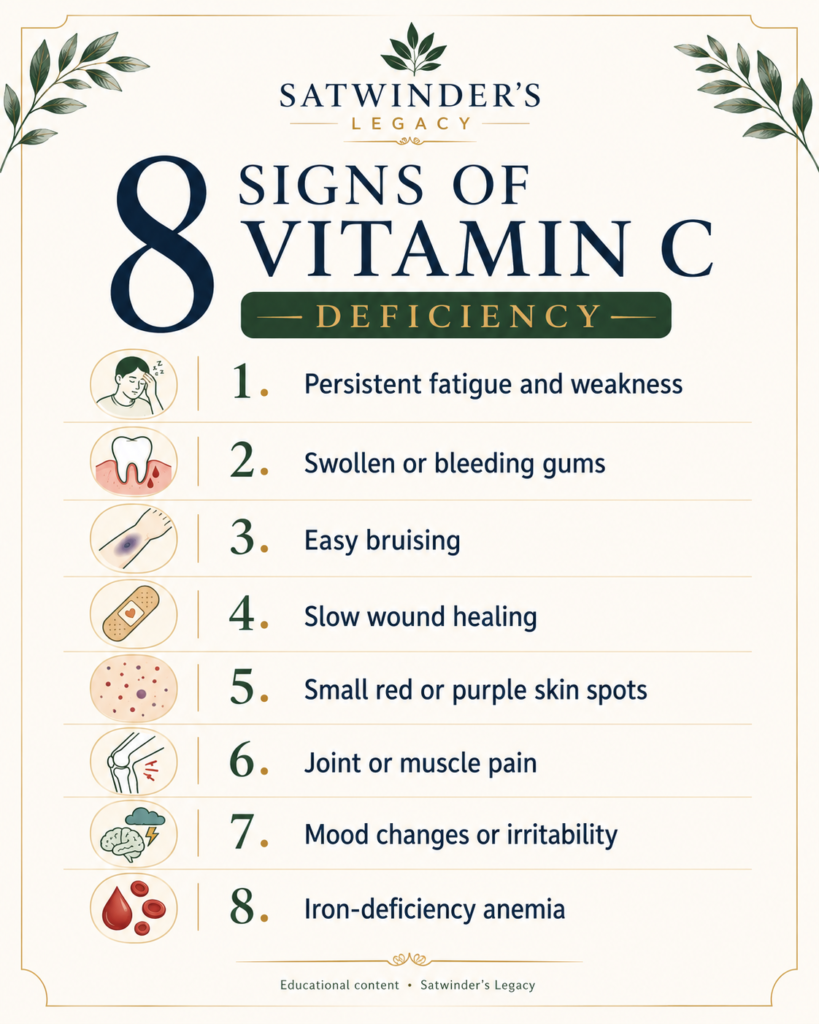
1. Persistent Fatigue and Weakness
One of the earliest warning signs can be a general feeling of tiredness or weakness. It is also easy to dismiss because fatigue can result from poor sleep, stress, anaemia, infection and many other conditions.
Vitamin C deficiency can contribute to fatigue directly, while low vitamin C intake can also reduce absorption of non-heme iron—the type found mainly in plant foods. The useful clue is not fatigue by itself, but fatigue appearing alongside gum changes, bruising or slow wound healing.
2. Swollen or Bleeding Gums
Healthy gums should not regularly bleed without explanation. In severe vitamin C deficiency, weakened connective tissue and fragile blood vessels can contribute to swollen or bleeding gums.
Bleeding gums are also commonly caused by gingivitis and other dental problems, so they do not automatically mean vitamin C deficiency. But if they occur with poor dietary variety, easy bruising or unusual fatigue, the wider pattern deserves attention.
3. Bruising More Easily Than Usual
Vitamin C is needed for collagen production, and collagen helps maintain the structure of skin and blood vessels. With significant deficiency, small vessels become more fragile, which can make bruising and bleeding under the skin more likely.
Persistent unexplained bruising should not be self-diagnosed as a vitamin problem because medicines, blood disorders and other conditions can cause the same sign.
4. Cuts and Wounds That Heal Slowly
The body needs collagen to repair damaged tissue. When vitamin C becomes severely deficient, collagen formation is impaired, so wounds may heal more slowly than expected.
MedlinePlus lists poor wound healing among the recognised features of scurvy. Diabetes, circulation problems and infection can also delay healing, so repeated or significant problems need proper assessment.
5. Small Red or Purple Spots on the Skin
Severe deficiency can cause tiny areas of bleeding around hair follicles, often appearing as red, purple or blue spots. These changes may be less obvious on darker skin tones.
Advanced scurvy can also produce unusually coiled or “corkscrew” hairs. These are more specific clues than ordinary tiredness, but they usually occur when deficiency has become substantial.
6. Joint, Muscle or Leg Pain
The NHS lists joint, muscle and leg pain among possible symptoms of scurvy. Weakened connective tissue and bleeding into tissues can contribute to pain or swelling when deficiency is advanced.
Joint pain is common and usually has other explanations, so once again the most useful approach is to look at the whole picture rather than one symptom in isolation.
7. Mood Changes or Irritability
Severe deficiency has been associated with irritability, low mood and a general sense of malaise. This does not mean vitamin C supplements are a treatment for depression or other mental-health conditions.
It is simply another reminder that prolonged nutritional deficiency can affect how the whole body feels and functions.
8. Iron-Deficiency Anaemia That Is Difficult to Explain
Vitamin C improves the absorption of non-heme iron, making it especially relevant for people whose diets rely heavily on pulses, beans, vegetables and grains.
ICMR-National Institute of Nutrition guidance encourages vitamin-C-rich foods such as guava and orange to improve iron absorption from plant foods. Practical pairings include dal with lemon, chana salad with tomato and lemon, leafy vegetables with amla, or sprouts with capsicum.
For a concise clinical description of scurvy—including weakness, anaemia, gum disease, skin bleeding and poor wound healing—see MedlinePlus.
Who Is More Likely to Develop Vitamin C Deficiency?
Severe scurvy is uncommon, but risk rises when diet variety becomes very limited. Higher-risk situations include smoking, highly restricted diets, poor appetite, and some conditions that interfere with nutrient absorption.
A useful way to think about the problem is this: vitamin C deficiency is often less about “forgetting to eat oranges” and more about losing dietary variety for a long period of time. Illness, financial difficulty, restrictive eating patterns, digestive disease or ageing can all make that happen.
The NIH also notes that people who smoke have higher vitamin C requirements because smoking increases oxidative stress. Read the NIH fact sheet.
Are You Getting Enough Vitamin C?
Recommended intakes vary somewhat by country and life stage. For context, U.S. dietary reference values are 90 mg per day for adult men and 75 mg per day for adult women, with higher needs during pregnancy, lactation and for people who smoke.
Most healthy people do not need to count milligrams every day. A more practical habit is to regularly include vitamin-C-rich fruits and vegetables.
Vitamin C Beyond Oranges: Useful Food Sources
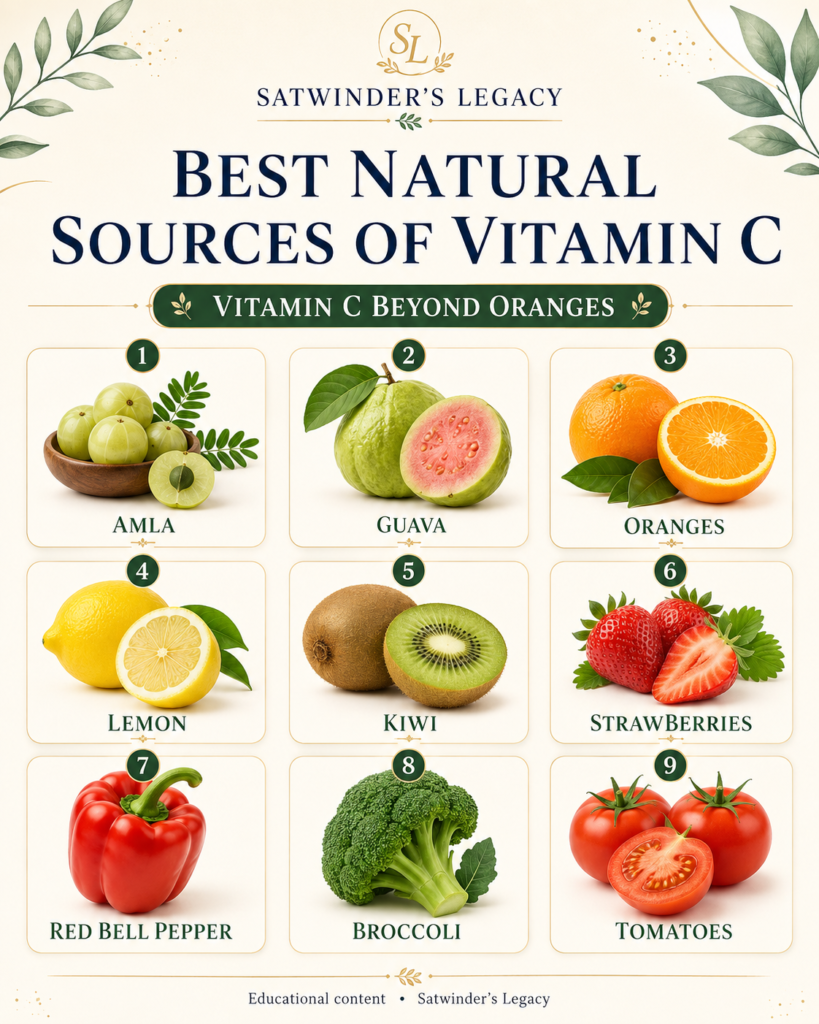
Amla, guava, citrus fruit, capsicum, kiwi, strawberries, broccoli and tomatoes can all contribute vitamin C. Vitamin C is water-soluble and sensitive to prolonged heat and storage, so including some fresh or lightly cooked produce can help preserve it.
For an India-specific practical recommendation, ICMR-NIN Dietary Guidelines 2024 recommend vitamin-C-rich fruits such as guava and orange to improve absorption of iron from plant foods.
Food or Supplements: Which Is Better?
For most healthy people, a varied diet can provide enough vitamin C. Supplements can be useful when intake is inadequate or when a healthcare professional recommends them, but more is not automatically better.
High supplemental doses can cause diarrhoea, nausea and abdominal cramps. The U.S. tolerable upper intake level for adults is 2,000 mg per day. People with kidney problems, iron-overload disorders or certain medical treatments should be cautious about high-dose supplements unless advised by a clinician.
When Should You Speak to a Doctor?
Seek medical advice if you have persistent or unexplained symptoms such as:
- Frequent or unusual bruising
- Bleeding or swollen gums
- Wounds that are not healing normally
- Persistent weakness or fatigue
- Unexplained red, purple or blue skin spots
- Joint or leg swelling
- A highly restricted diet combined with new physical symptoms
These signs can have causes completely unrelated to vitamin C deficiency, some of which may require prompt treatment. A clinician can review your diet, medications and symptoms and decide whether testing or treatment is appropriate.
The Bigger Lesson: Look at Patterns, Not Individual Symptoms
Vitamin C deficiency offers a useful lesson about nutrition: the body rarely works in isolated boxes. Bleeding gums may look like a dental issue. Fatigue may look like overwork. Bruising may be dismissed as clumsiness. Poor wound healing may seem unrelated.
Sometimes the pattern tells the story. The most effective approach is not to chase individual vitamins only after symptoms appear, but to build enough variety into everyday meals that deficiencies are less likely to develop in the first place.
Fresh fruits. Vegetables. Pulses. Whole foods. Different colours. Different sources. Simple habits, repeated consistently.
Conclusion
Vitamin C deficiency may be uncommon in its most severe form, but it has not disappeared. Persistent fatigue, easy bruising, bleeding gums, slow wound healing, unusual skin changes and joint pain can all occur as deficiency progresses. None of these symptoms alone proves that vitamin C is the cause, but combinations of symptoms—particularly in someone eating a very limited diet—deserve attention.
Rather than reaching immediately for high-dose supplements, start by asking a broader question: Is your diet varied? Are fruits and vegetables part of your everyday routine? Has your eating pattern changed recently? Nutrition is rarely about one “superfood.” It is about what we repeatedly give our body over time.
| YOUR NEXT STEPLook at your meals from the past three days. How many different fruits and vegetables did you actually eat? Choose one simple change for this week—add guava or amla to breakfast, squeeze lemon over dal, include a fresh salad at lunch, or add a fruit between meals.Explore more from Satwinder’s Legacy → Health, and share this article with someone who may benefit from noticing the quieter signs of nutritional deficiency. |
Suggested Internal Links for Future Articles
- Why Vitamin C Matters: Benefits, Sources and Daily Needs
- Food vs Supplements: What Is the Best Way to Get Vitamin C?
- Vitamin C and Iron Absorption: Why This Combination Matters
- Beyond Oranges: Everyday Foods Rich in Vitamin C
- Simple Habits for a Healthier Diet
Health information on Satwinder’s Legacy is for general educational purposes and is not a substitute for personalised medical advice, diagnosis or treatment.Key sources used: NIH Office of Dietary Supplements, NHS, MedlinePlus, and ICMR-National Institute of Nutrition
