

Vitamin B Deficiency: Signs You Should Not Ignore
SATWINDER’S LEGACY • HEALTH
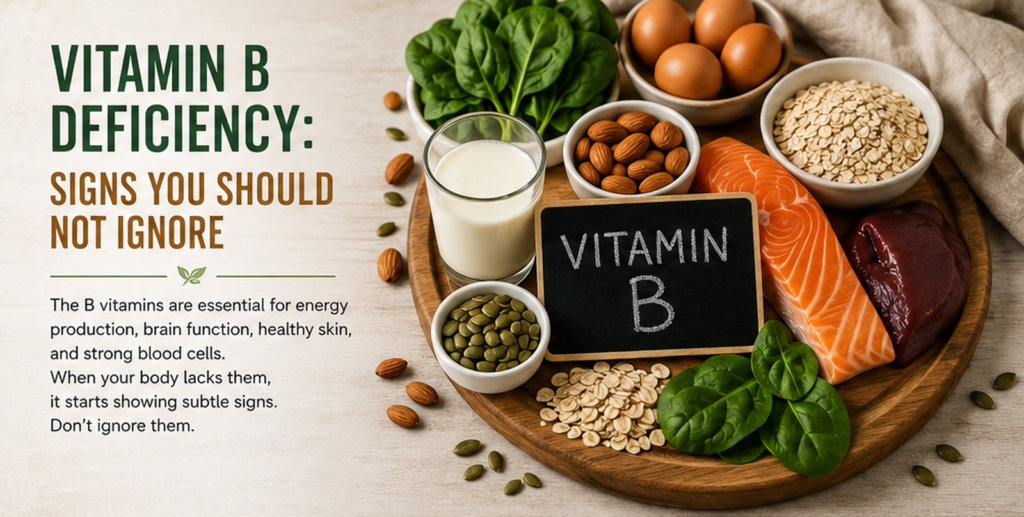
Feeling Tired All the Time? Your Body May Be Trying to Tell You Something
You are getting enough sleep, yet you still feel drained. Cracks keep appearing at the corners of your mouth. Your hands occasionally tingle, or concentrating seems harder than usual.
These symptoms are easy to dismiss. We often blame stress, lack of sleep or a busy routine. But sometimes they may be signs that the body is missing important nutrients.
Vitamin B deficiency is particularly interesting because there isn’t just one vitamin B. The B-complex family contains eight different vitamins, including B1, B2, B3, B5, B6, B7, B9 and B12. They perform different functions involving energy metabolism, blood-cell production, the nervous system and normal cellular processes.
That also means there isn’t one universal symptom of vitamin B deficiency.
The key is to notice patterns rather than individual symptoms.
Vitamin B Deficiency: One Name, Different Nutrients
When people say they have a “vitamin B deficiency”, they are usually referring to low levels of one or more members of the B-vitamin family.
Different B vitamins have different responsibilities. For example, vitamin B12 is particularly important for healthy blood and nerve cells, while thiamin (B1) plays an important role in energy metabolism and nerve function.
This explains why symptoms can vary considerably from one person to another.
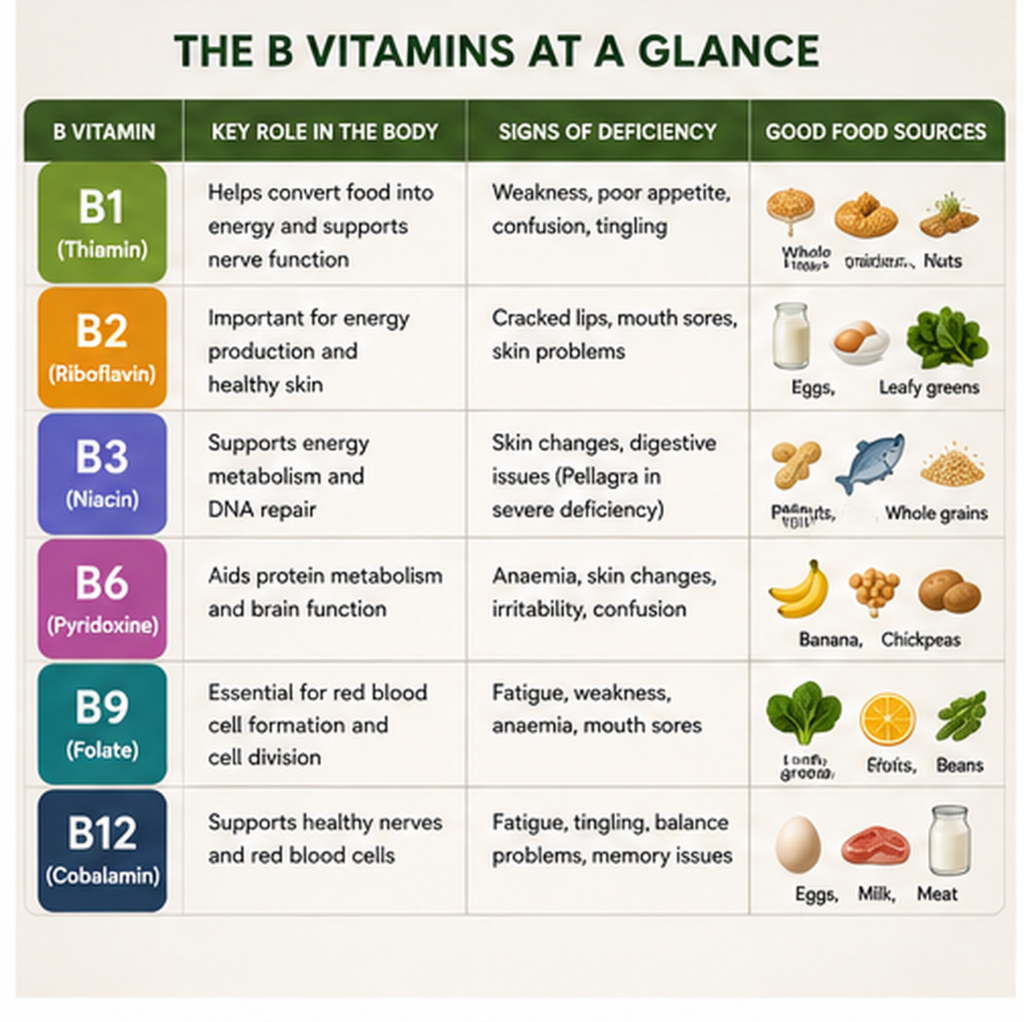
| B Vitamin | Important Role | Possible Deficiency Clues |
|---|---|---|
| B1 – Thiamin | Energy metabolism and nerve function | Weakness, poor appetite, neurological problems |
| B2 – Riboflavin | Energy production and cellular function | Cracked lips, mouth sores, skin problems |
| B3 – Niacin | Energy metabolism | Skin and digestive changes when severely deficient |
| B6 – Pyridoxine | Protein metabolism and nervous-system function | Anaemia, skin changes, mouth changes, confusion |
| B9 – Folate | DNA production and red-blood-cell formation | Fatigue, weakness, anaemia |
| B12 – Cobalamin | Healthy blood and nerve cells | Fatigue, tingling, memory or balance problems |
Riboflavin deficiency, for example, can produce sores at the corners of the mouth and swollen or cracked lips, while inadequate vitamin B6 can cause anaemia, skin changes, cracks at the mouth and a swollen tongue.
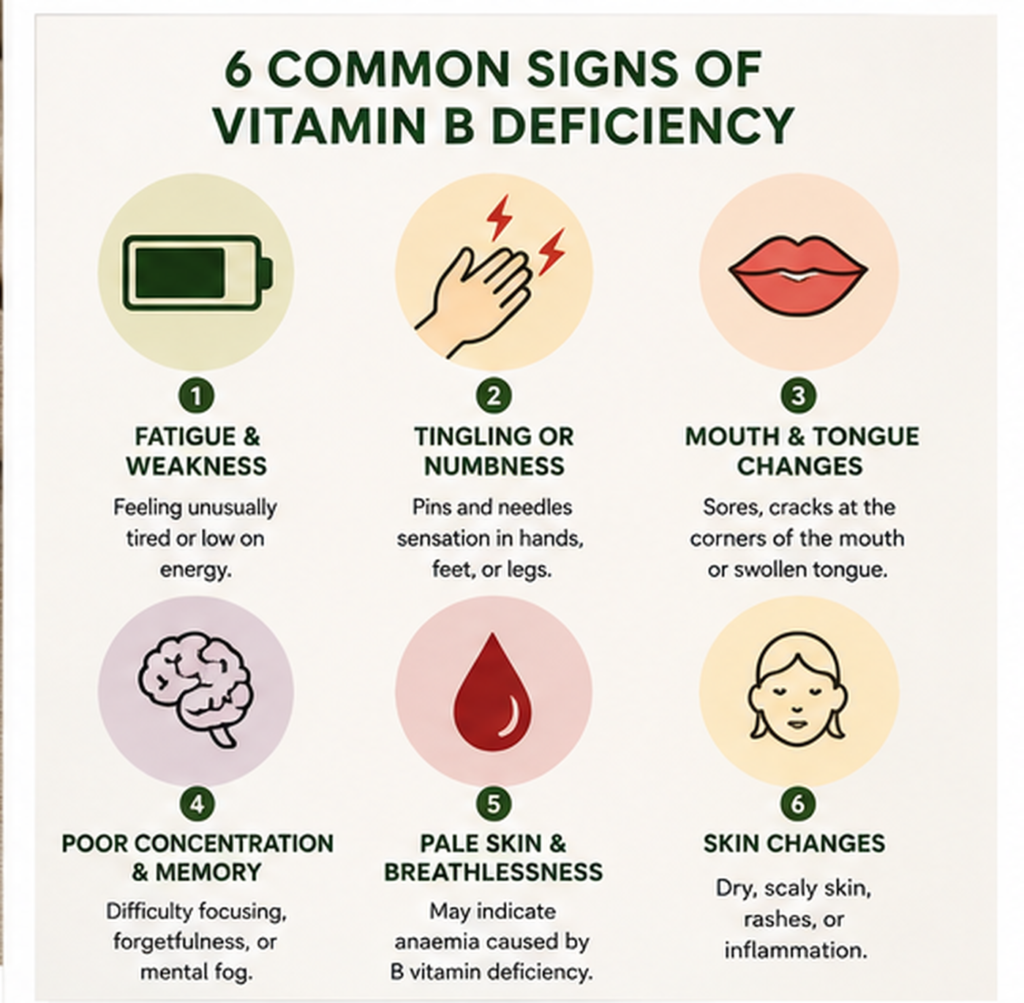
6 Signs of Vitamin B Deficiency You Should Not Ignore
1. Persistent Fatigue and Weakness
Fatigue is probably the easiest warning sign to overlook.
Feeling tired does not automatically mean vitamin deficiency. Stress, poor sleep, iron deficiency, illness and many other conditions can cause fatigue.
However, vitamin B12 or folate deficiency can cause tiredness, weakness and lack of energy, particularly when it affects healthy red-blood-cell production.
The important question isn’t simply:
“Am I tired?”
Instead ask:
“Am I unusually tired, and are other unexplained symptoms appearing with it?”
2. Mouth and Tongue Changes
Your mouth can sometimes provide surprisingly useful nutritional clues.
Recurring cracks at the corners of the mouth, swollen lips, mouth sores or a sore tongue can occur with deficiencies of certain B vitamins.
Riboflavin deficiency is associated with cracked lips and sores around the mouth, while B12 or folate deficiency may cause a sore red tongue or mouth ulcers.
One mouth ulcer is unlikely to tell you much.
But repeated mouth changes combined with fatigue, dietary restriction or other symptoms deserve more attention.
3. Tingling or Numbness
Pins and needles in your hands or feet are symptoms that should not simply be ignored when they persist.
Vitamin B12 helps maintain healthy nerve cells. Deficiency can produce neurological changes, including numbness or tingling in the hands and feet.
Importantly, neurological symptoms may occur even when obvious anaemia is absent.
Many other conditions can also cause tingling, so unexplained or persistent numbness should be medically assessed rather than self-treated with supplements.
4. Difficulty Concentrating or Memory Changes
We all forget things occasionally.
But persistent brain fog, difficulty concentrating or noticeable changes in memory may sometimes accompany deficiencies such as vitamin B12 deficiency.
B12 deficiency can affect the nervous system and has been associated with memory and cognitive changes.
Again, the goal isn’t to blame every forgotten name or misplaced key on nutrition.
Pay attention when a new change persists or occurs alongside other physical symptoms.
5. Pale Skin, Breathlessness or Palpitations
Some B-vitamin deficiencies can affect red-blood-cell formation and contribute to anaemia.
Vitamin B12 or folate deficiency anaemia may cause symptoms including weakness, breathlessness and palpitations.
These symptoms can also occur with many other medical conditions.
Persistent breathlessness or heart palpitations should therefore be evaluated rather than assumed to be nutritional.
6. Skin Changes
Different B-vitamin deficiencies can affect the skin in different ways.
Vitamin B6 deficiency may cause itchy rashes and changes around the lips, while riboflavin deficiency can produce skin disorders and mouth-related symptoms.
This is another reason why “Vitamin B deficiency” should be viewed as an umbrella term rather than one single condition.
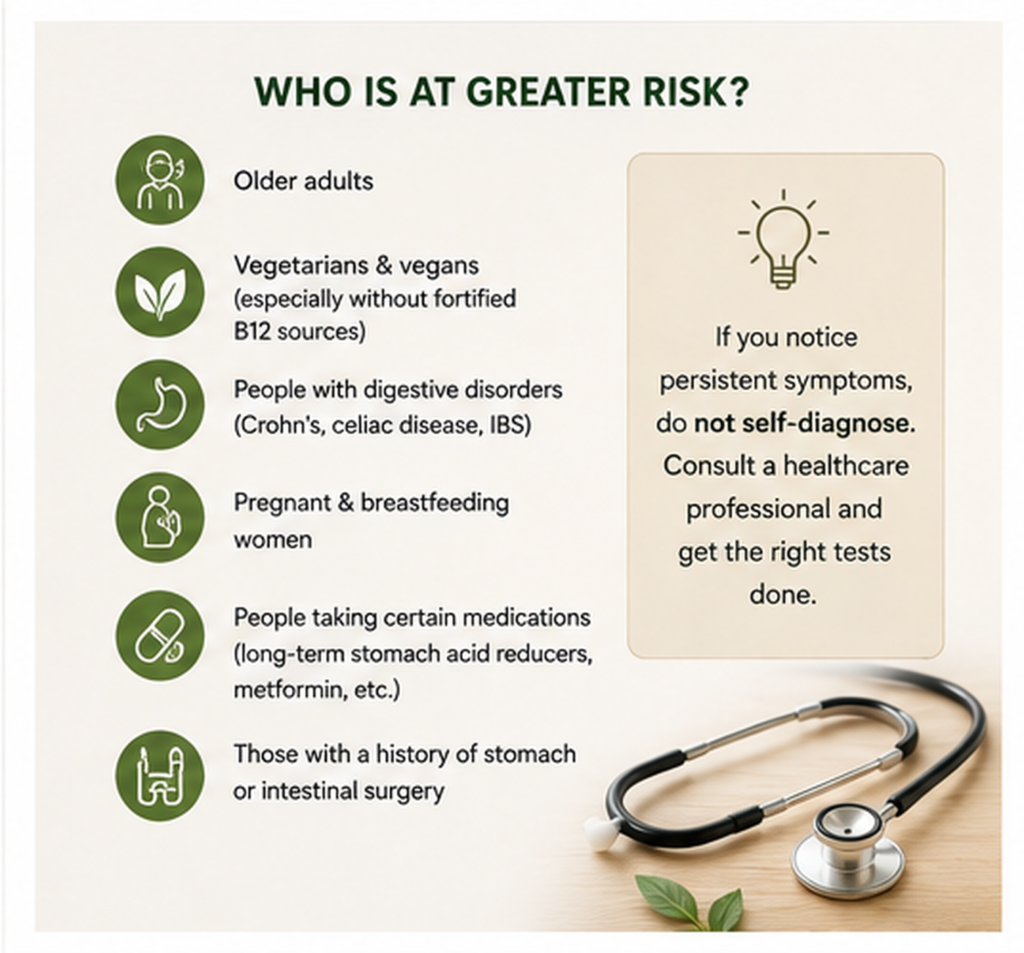
Who May Be at Greater Risk?
Vitamin deficiency isn’t always caused simply by an unhealthy diet.
Sometimes a person may eat enough of a nutrient but have difficulty absorbing it.
Vitamin B12 deficiency, for example, may occur because of digestive conditions, lack of intrinsic factor, previous gastrointestinal surgery or prolonged use of certain medicines. NIH notes that medicines including metformin and proton-pump inhibitors can interfere with vitamin B12 status in some people.
People who may deserve particular attention include:
- Older adults
- Vegetarians and vegans without reliable B12-fortified foods or supplements
- People with certain stomach or intestinal disorders
- People who have undergone some forms of gastrointestinal surgery
- People taking certain medications over long periods
- People following highly restrictive diets
Dietary vitamin B12 occurs naturally primarily in animal-derived foods, so people avoiding these foods need reliable fortified sources or appropriate supplementation.
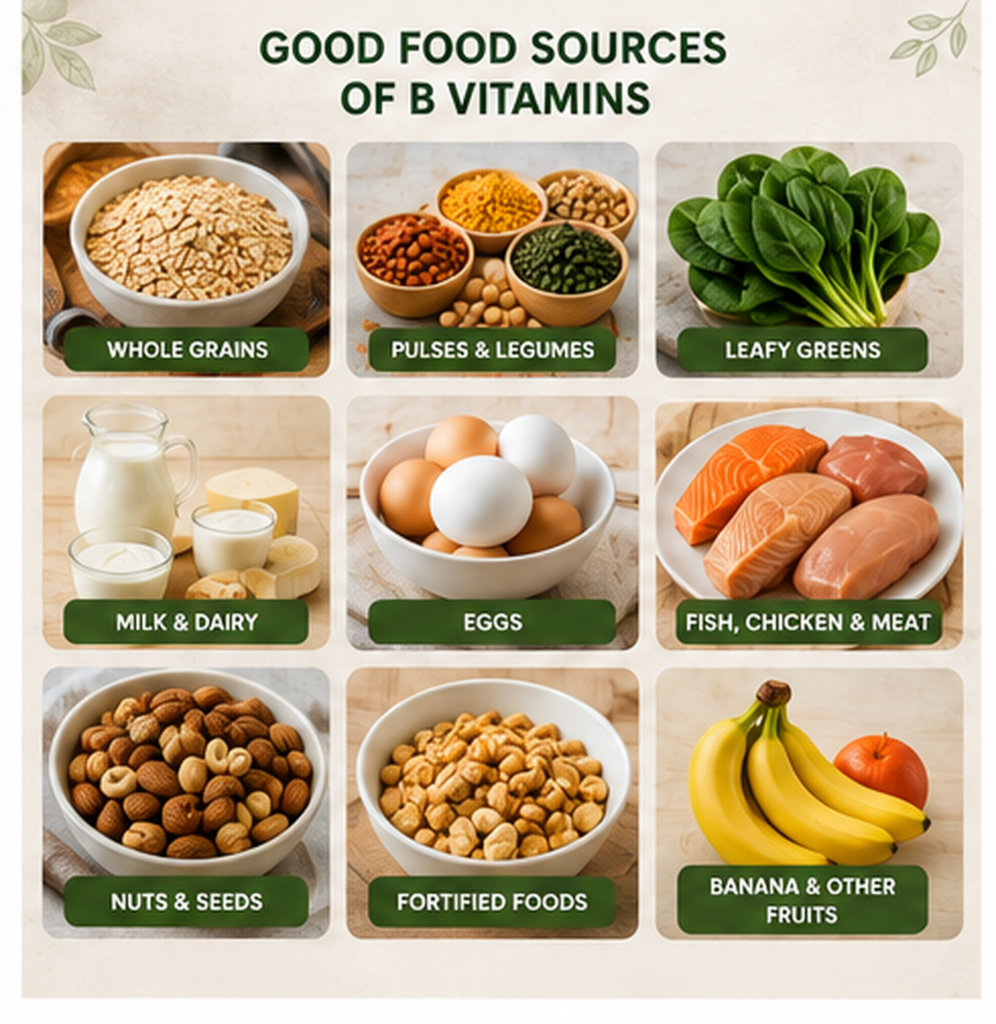
What Foods Provide B Vitamins?
Instead of searching for one magical “vitamin B food”, focus on dietary variety.
Different foods provide different members of the B-vitamin family.
Useful choices include:
- Whole grains — provide several B vitamins
- Pulses and legumes — useful sources of folate and other B vitamins
- Leafy vegetables — particularly valuable for folate
- Eggs — provide several B vitamins
- Milk and dairy products — provide riboflavin and B12
- Nuts and seeds — contribute several micronutrients
- Fish, poultry and meat — important sources of B12 and other B vitamins
- Fortified foods — particularly useful as B12 sources for people avoiding animal products
For most people, a varied and balanced diet is the foundation for meeting vitamin and mineral requirements, although some individuals require supplementation because of specific nutritional or medical needs.
Think variety, not perfection.
A plate containing different food groups over the course of the week is generally more useful than repeatedly chasing individual “superfoods.”
Should You Take a B-Complex Supplement?
Not automatically.
Seeing several symptoms on this list doesn’t prove that you have vitamin B deficiency.
And taking large amounts of vitamins “just in case” isn’t always harmless.
For example, excessive vitamin B6 from supplements over time can cause serious nerve damage.
The better approach is:
Symptoms → understand possible causes → seek appropriate testing if needed → correct the actual problem.
Rather than:
Symptoms → buy the strongest supplement available.
A supplement can be useful when there is an identified need, but it should not replace understanding why the deficiency developed.
When Should You Speak to a Doctor?
Consider seeking medical advice if you experience persistent or unexplained:
- Extreme fatigue or weakness
- Tingling or numbness
- Balance or coordination problems
- Repeated mouth or tongue changes
- Shortness of breath
- Palpitations
- Memory or concentration changes
- Significant dietary restriction combined with symptoms
This is particularly important with possible B12 deficiency because prolonged deficiency can affect the nervous system, and some neurological damage can become difficult to reverse.
Conclusion: Pay Attention to Patterns
Vitamin B deficiency isn’t one condition with one simple symptom.
It can involve different vitamins, different causes and different effects on the body.
Fatigue by itself may tell you very little.
But fatigue combined with recurring mouth problems, persistent tingling, unusual weakness or cognitive changes creates a pattern worth investigating.
The goal isn’t to become worried about every small symptom.
It’s to become more aware of what your body is consistently telling you.
Eat a varied diet. Pay attention to persistent changes. Avoid unnecessary high-dose supplementation. And when symptoms don’t make sense, investigate rather than guess.
One Small Step Today
Think about what you ate during the last three days.
Did your meals include a genuine variety of whole grains, pulses, vegetables, dairy or suitable alternatives, nuts, seeds, eggs or other protein sources?
If not, don’t overhaul your entire diet overnight.
Add one better choice today and build from there.
Small improvements become powerful when they become habits.
If you found this article useful, share it with someone who may benefit from recognising the quieter signs of nutritional deficiency.
Related reading: Vitamin C Deficiency: Signs You Should Not Ignore
[Insert your internal link here]